

Why Your Dog Reacts on Leash, and What’s Really Going On

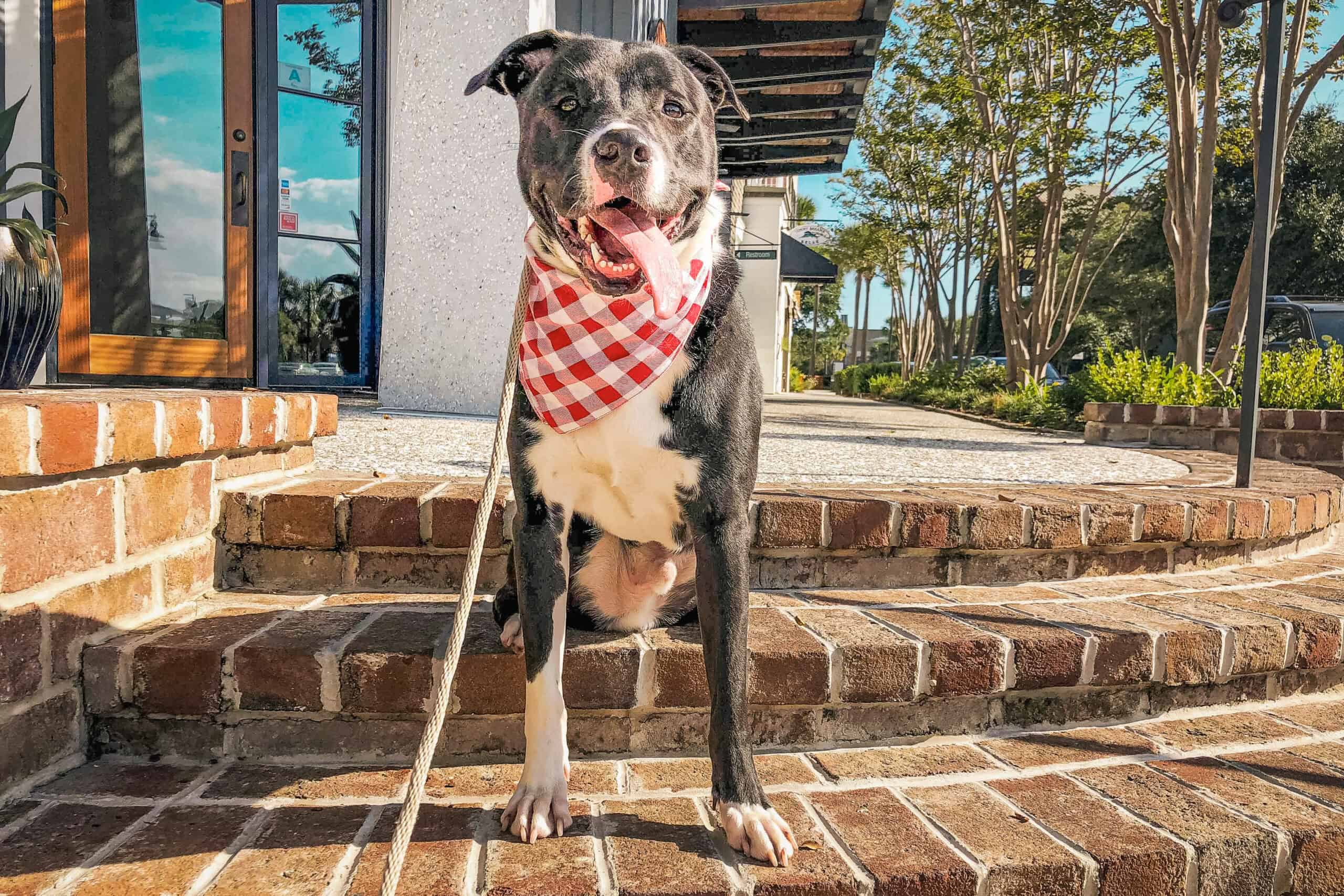
You see the other dog before your dog does. You shorten the leash, pick up the pace, maybe cross the street. And then it happens anyway: the lunging, the barking, the spin at the end of the leash while you apologize to a stranger and reel your dog back in. You walk home wondering what is wrong with your dog, and whether this is just how walks are going to be from now on.
The first thing worth knowing is this: your dog is not broken, and not out to give you a hard time. What looks like misbehavior makes sense once you see what is driving it. This piece walks through what that is, and why the advice you have probably already been given so often makes things worse.
Your dog is not being bad. Their nervous system is overwhelmed.
It is easy to read a reaction as a character flaw. He’s dominant. She’s stubborn. He hates other dogs. But a dog lunging at the end of a leash is not making a calculated decision to misbehave. They are having a feeling they cannot manage, and it is pouring out the only way it can.
Most of the dogs I meet who have been called aggressive are nothing of the kind. They are frightened, or flooded, or both, doing the only thing that has ever made the scary thing back off. The owner is braced for a mean dog, and what walks in is a worried one.
Reactivity is an emotional event, not a personality. Most reactive dogs are some mix of overstimulated, frustrated, and frightened, and the leash makes all three worse by taking away the one thing a dog would naturally do with a big feeling: move. They cannot create distance, they cannot go investigate, they cannot leave. So the feeling has nowhere to go, and it comes out loud.
Once you see the behavior as a dog who is overwhelmed rather than a dog who is misbehaving, everything about how you help them starts to change.
The other dog isn’t the problem. It’s the excuse your dog has been waiting for.
The trigger is usually just the excuse
What surprises most owners is this: the thing your dog reacts to is often not the real cause of the reaction.
Picture a person who is already wound up, pacing, full of restless energy with nowhere to put it. It does not take much to set them off. A small annoyance becomes a big one, because they were primed and looking for somewhere to aim it. Plenty of dogs live in that state more than we realize. Their internal volume is already turned up, and the squirrel, the bike, or the dog across the street is simply the excuse to let it out.
This is why the pattern can look so confusing. Your dog is fine with that dog but not this one. Calm on Tuesday, a mess on Thursday. If the trigger were the whole story, the reaction would be consistent. It is not consistent, because the trigger was never the point. The arousal was already there, waiting for a target.
That is also the good news. If the problem were “my dog hates other dogs,” you would be stuck trying to change how your dog feels about every dog on earth. But if the real issue is a dog carrying too much arousal with no way to bring it down, that is something you can teach.
Why some days are so much worse than others
Every dog has an emotional baseline, a sort of resting level they sit at when nothing much is happening. Some dogs rest low and easy. Others rest high and tightly wound, and those are the dogs who seem to go off over nothing.
When something startles or excites your dog, that baseline spikes, and their body releases stress chemistry to match. Here is the part almost no one is told: that chemistry does not drain away the moment the dog stops barking. It lingers, sometimes for hours. So the dog who got rattled by the garbage truck this morning is still carrying that charge at lunchtime, sitting closer to the edge, and the perfectly ordinary dog you pass on your afternoon walk tips them over.
It was not the afternoon dog. It was a morning that never fully cleared. When you start watching for this, the “random” reactions stop looking random. You begin to see a dog who has been topped up all day and finally spilled over.
What does not help, even though it feels right
When your dog erupts, every instinct says to make it stop. The things that come most naturally are exactly what any caring owner reaches for, and they are completely understandable. They also tend to work against you, and it helps to know why.
Yelling or telling your dog to knock it off rarely lands the way we hope. To a dog mid-reaction, a loud, urgent owner sounds a lot like a second dog joining in. Instead of calming the moment, you have added to the noise.
Tightening the leash and hauling your dog back tells them that the sight of another dog comes with sudden pressure and tension, which only confirms that the street is a stressful place. And walking your dog straight up to the thing they fear, to “show them it’s fine,” usually floods an already overwhelmed nervous system and teaches them the world is even less safe than they thought.
None of these reach the thing driving the reaction. At best they manage a single moment, and they leave the real cause untouched.
What helps instead
Lasting change comes from working with the dog underneath the behavior, not the behavior on the surface. A few things make the difference.
First, you work at a level your dog can still think at. There is a point of intensity past which a dog can no longer learn, where they are too far gone to hear you or take a food reward. The work happens below that line, at whatever distance or volume lets your dog notice the trigger and stay able to make a choice. Push past it and you are not training, you are just rehearsing the meltdown.
Second, you help your dog learn to come back down. A reaction has an arc: it rises, it peaks, and it falls. A dog who only ever practices the rising part gets very good at escalating. A dog who is helped, again and again, to settle and recover learns something far more useful. They learn how to climb out of the hole instead of getting stuck in it, and that resilience carries into the next walk and the next.
Third, you change how your dog feels about the trigger, not just what they do about it. Teaching a dog to white-knuckle past another dog is fragile. Helping a dog feel calmer and safer when another dog appears is durable, because you have changed the emotion the behavior was built on. Lower the baseline, build the recovery, shift the feeling, and the lunging has nothing left to stand on.
What this looks like at Well Mannered Dog
This is the heart of our Calm Perception program. We built it for exactly this dog, the one who is not difficult, just carrying more than they can manage on their own.
We start by getting to know your dog and where their baseline sits. Then we build the emotional skills first: helping your dog settle, recover, and stay connected to you when the world gets loud, before we ever ask for polished behavior around a trigger. The walk you are dreading becomes the last step, not the first, and your dog meets it with skills they did not have before.
We’ve helped a lot of Charleston dogs, and the people who love them, get back to walks they look forward to. Your dog can be one of them.
A different kind of walk is possible
The dog at the end of your leash is not a lost cause, even on the days that feel like proof otherwise. Reactivity is one of the most workable things we help with, because once a dog learns to carry less and recover faster, the walks start to change on their own.
If you are tired of bracing every time you reach for the leash, let’s talk about your dog and what your walks could look like instead. A discovery session is just a conversation, no commitment, where we figure out together whether we are the right fit for the two of you.
Let’s find the right fit for your dog

No two reactive dogs are the same, and what is driving the lunging in one is rarely what sets off another. The surest way to know whether we can help yours is a real conversation. Tell us about your dog and where things get hard, and we will help you see what is possible.