

The Real Cost of Skipping Puppy Training

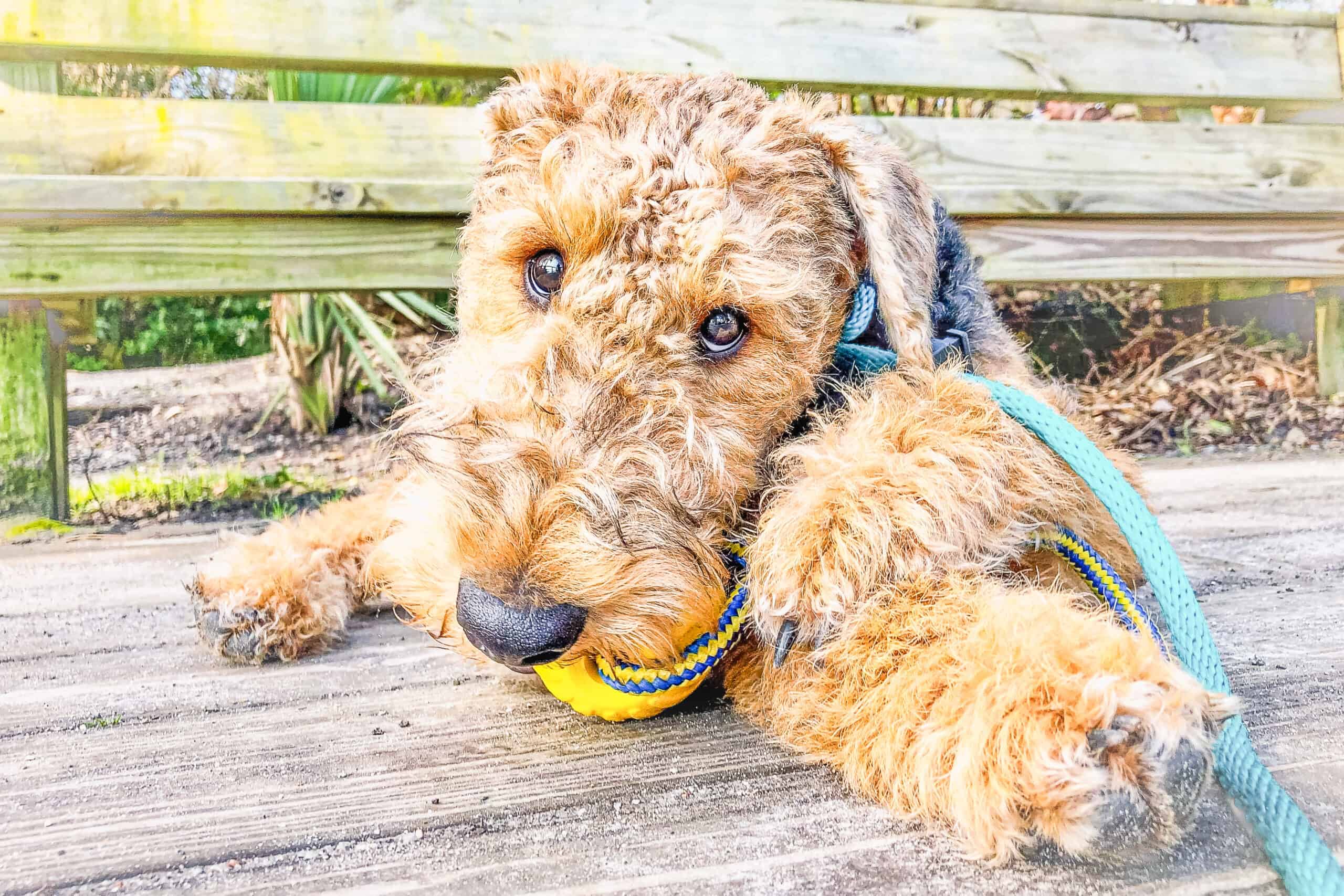
Your puppy is four months old and, by most measures, not that bad. A few accidents, some sharp little teeth, more energy than you knew a small animal could hold. The other morning you stepped onto the porch in your pajamas to grab a package, a small blur shot past your ankles, and there you were at seven a.m. doing a slow lap of the neighborhood in your slippers, calling a name the dog has clearly decided is optional. Mortifying. Also survivable.
That is the thing about these early months. The chaos is real, but it feels like something you can ride out. So when someone brings up puppy training, it is easy to file under later. They grow out of this. You will handle it when you need to. Why pay now for a problem you do not really have yet.
Here is the part that is hard to see from inside those easy first months. Waiting is not a neutral choice. The weeks you are waiting through are the ones doing the most work, and they do not come back around.
This is not about whether your puppy is good or difficult right now. It is about what these weeks are quietly deciding, and what it takes to get them back later. Most of that price stays invisible until it has already been paid.
The clock you cannot see
Puppies run on a developmental window, and it is shorter than almost anyone expects. By around six months, most of the pathways in your puppy’s brain that will guide how they handle the world are already set. How they meet new people. Whether a strange noise is a threat or a non-event. Whether being alone is bearable. Whether they look to you when they are unsure, or decide for themselves.
None of that waits for you to be ready. Every single day, your puppy is learning who the world is and how to respond to it. The only open question is whether anyone is choosing what they learn, or whether the dog is left to draw their own conclusions from whatever happens to come up.
That is the cost no invoice shows you. Not a behavior you can fix on a weekend, but a window that closes on its own schedule whether you used it or not.
You are not deciding whether to train your puppy. You are deciding whether it happens by design, or by default.
What “we’ll deal with it later” looks like later
Years ago I worked with a woman whose pointer could not stand to be left alone. One afternoon she was at her neighborhood pool, finally relaxing, when her dog chewed through the drywall, pulled the insulation out, and broke through the siding at the front of the house. The next thing she knew, her pointer was sailing over the pool fence and landing, airborne and delighted, right in the middle of her quiet afternoon. He was thrilled with himself. His owner, not so much.
It is a good story now. It was not a good story then, and it did not start as a dog who demolishes walls. It started as a puppy who was a little unsettled when she left the room, back when that looked like something to deal with later.
Most of what I see is quieter than a pointer sailing over a fence. Picture the same kind of dog at fourteen months. The accidents are long gone, but other things took their place, and none of them announced itself. They arrived one ordinary day at a time.
The dog lunges at other dogs on the leash now, so walks happen at six in the morning when the street is empty, if they happen at all. Guests mean the dog gets shut in a back room, because the jumping and the spinning are easier to handle behind a door. Being left alone slid toward panic. And under all of it sits a feeling the owner rarely says out loud: this is a wonderful dog, and somehow it is not quite the dog I pictured, and I am not sure when that happened.
None of it came from a bad dog. It came from a good dog who was never shown how, in the months when showing them was easy. The behavior is only the surface. The real loss is quieter and a little sadder, and you measure it in the size of the life you and your dog can comfortably share.
Why later costs more than now
There is a reason early work is the cheap version. When you start in the window, you are building on a blank page. When you wait, you are not. You are competing with a habit the dog has practiced thousands of times, one that works for them. A dog who lunges has learned that lunging creates distance. A dog who panics alone has rehearsed that panic until it runs on its own. None of it is malice. In all the years I have done this, I have never met a dog who set out to be difficult, only dogs who were never handed a better option in time. It is just deeply grooved.
Undoing a groove takes longer than never cutting it. Remedial work asks more sessions, more patience, and more of the dog’s stress, and even then the ceiling can sit lower than it would have. Starting early is not the expensive option you are putting off. It is the discount, and it expires.
What starting early buys
It helps to be clear about what you are paying for, because it is not a pile of cues. A puppy who sits on request is nice. A puppy who can settle when the house gets loud, recover quickly after a startle, and stay connected to you when something exciting walks by is a different animal to live with, for the next decade.
That steadiness is the real product. It is confidence built in the one window where it sticks, and a relationship where your dog looks to you instead of one where you spend years managing your dog. Everything good that comes later, the off-leash trust, the dog you can take to a patio or a friend’s porch, gets built on that foundation. Skip the foundation and you are not saving the work. You are moving it downhill, where it is harder.
What this looks like at Well Mannered Dog
We built Puppy Base Camp around this exact window, because we kept meeting well-loved adult dogs whose people were never handed a plan for the puppy in front of them, only a checklist or a shrug.
We start by getting to know your puppy, then build the emotional foundation first: helping them learn to settle, recover, and stay connected to you when the world turns up the volume. Socialization is woven in on purpose, guided and gentle rather than a crowded free-for-all, and you are part of the work the whole way through, so the skills hold at home and not just in a session. The goal is the one you started with, an adult dog you can take anywhere and a relationship that keeps growing.
That is the outcome we have helped a lot of Charleston families reach with their own puppies. We would love to help yours get there too.
The cheapest this ever gets is today
The window does not care whether you feel ready, and readiness is not the requirement. A good program meets you where you are and builds the plan around your actual puppy, starting from whatever week you are in now.
Set up a discovery session and we will talk through your puppy, what you are hoping for, and whether we are a fit for each other. Starting sooner is not about doing more. It is about spending this window instead of spending years buying it back.
This window only opens once.

Your puppy is learning every day, with or without a plan. A discovery session is where we look at where your puppy is right now and map the foundation worth building while it still comes easy.