

How to Choose a Puppy Training Program in Charleston, SC

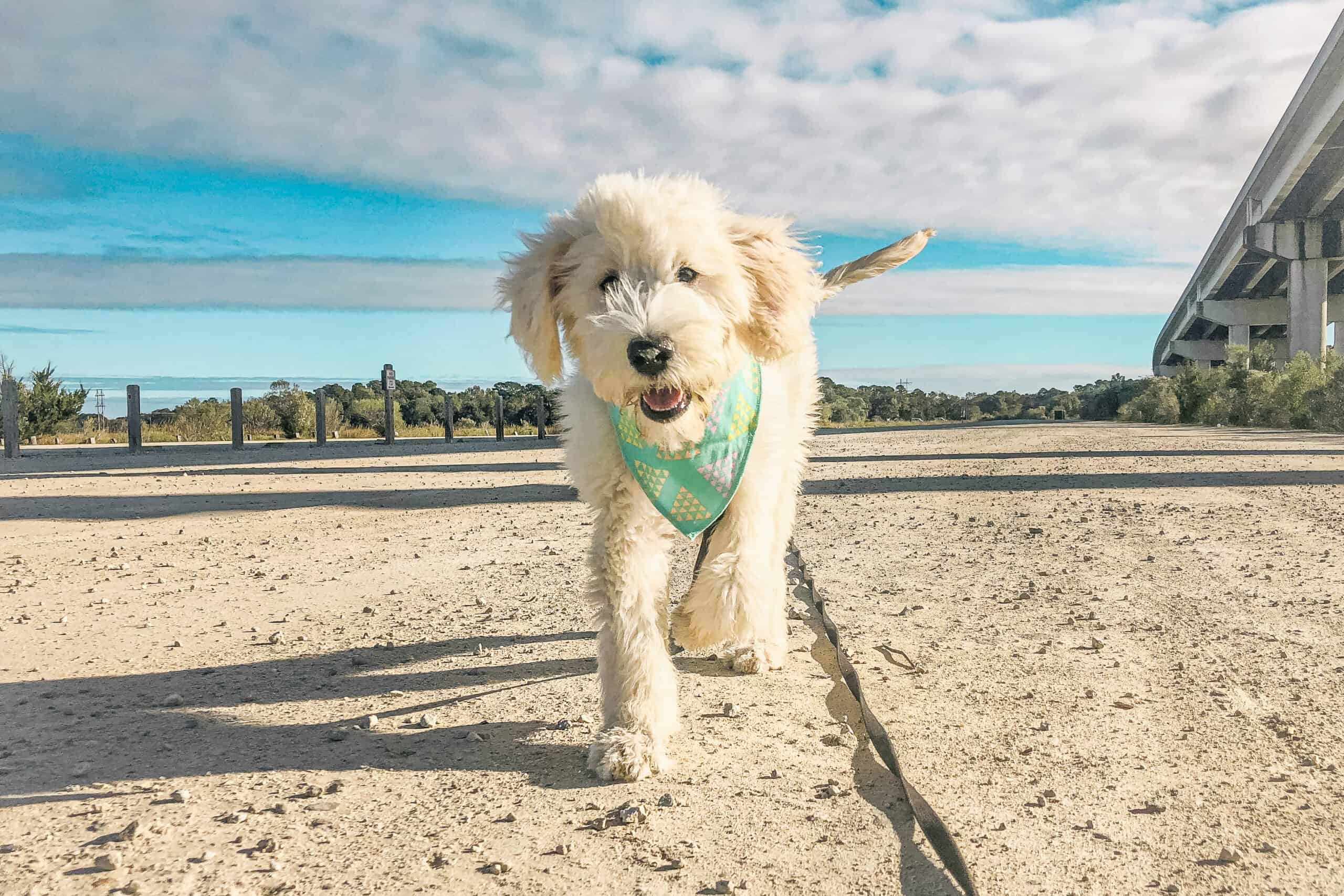
You brought home a puppy. Somewhere between the chewed shoe, the puddle by the back door, and the crying at 3 a.m., it hit you: you want to get this right. You have a short window to shape who this dog becomes, and how you spend it matters.
Charleston gives you plenty of options for puppy training, and from the outside they can look the same. Every one of them promises a well-behaved dog. So how do you tell them apart, and how do you know which one is right for your puppy?
You do not need to become a training expert to choose well. You need a way to think about it that keeps your puppy at the center of the decision. This guide gives you that, starting with the one idea that decides how the whole thing turns out.
Start with the question that predicts the outcome
Most puppy training is sold on behaviors: sit, stay, walk nicely, stop jumping. Those matter, and your puppy will learn them. But behaviors are the surface. The thing that predicts whether you will have a balanced, happy adult dog three years from now is quieter. It is whether your puppy learns how to handle their own emotions.
I have met countless dogs whose owners assured me they knew how to sit. They would sit, but sitting quickly turned into tap dancing in place while their excitement bucket filled and filled. It wouldn’t be long before it spilled over, and they would launch all over me moments after I stepped through the front door for our first lesson.
A young dog feels everything at full volume. The doorbell, a skateboard rolling past, a bigger dog at the park, being left alone in the house. All of it lands hard. A puppy who has only learned cues can still come apart when those feelings run high. A puppy who has learned to manage the feeling first can pause, settle, and make a better choice on their own.
That is the difference between a dog who performs when you are watching and a dog who is easy to live with everywhere.
When you teach the emotions early, the behavior lasts. Carry that lens into every conversation you have with a trainer.
What emotional skills look like
“Emotional intelligence” can sound like a nice phrase with nothing behind it, so here is what it looks like in a real dog. A puppy who is building emotional skills:
- settles itself when the house gets loud, instead of spinning up
- recovers quickly after a startle, rather than staying rattled for an hour
- chooses calm near another dog, instead of lunging or freezing
- can be left alone without panic
- greets people with four feet on the floor, because being calm feels good to them, not because it was forced
A puppy who builds these skills becomes the dog people describe as well-adjusted, happy, and fun to be around. And those skills hold, because they were built from the inside out rather than drilled in from the outside.
The questions worth asking before you choose
A handful of questions will tell you more about a program than any list of services. Here are the ones that matter most for a puppy.
Does the program get to know your puppy first?
No two puppies arrive the same. A bold, busy puppy and a soft, worried puppy need very different things, even though they are the same age. A program built around your dog will want to understand who your puppy is before handing you a plan. A fixed curriculum treats every puppy as identical. Ask whether the first step is getting to know your dog, or simply enrolling them in a set syllabus.
Does it teach emotional skills, or only behaviors?
This is the heart of it. A puppy can learn to sit beautifully in a quiet room and still fall apart the moment life gets exciting. Ask how a program helps your puppy stay calm and bounce back, not just how fast it can teach a sit. The programs worth your time treat that steadiness as a skill they build on purpose.
Is socialization done on purpose, and safely?
Socialization is the most misunderstood part of raising a puppy. It is not a numbers game of meeting as many dogs and people as possible, and more is not always better. Done carelessly, it can teach a puppy that the world is overwhelming. Done well, it is a series of guided, positive experiences at your puppy’s pace, in settings that are set up to go right. Ask what socialization means inside the program, and who is making sure each experience is a good one.
Will the skills hold up as your puppy grows?
The real test of puppy training is not how your dog behaves in class. It is how they behave at eighteen months, in your living room, at a friend’s house, on a busy Charleston sidewalk. Ask how the program helps the skills transfer into real life and stick as your puppy matures into an adolescent and then an adult.
What happens after the program ends?
Good training is a relationship, not a one-time transaction. Puppies grow, life changes, and new questions come up. Ask what support looks like after the last session, so you are not left on your own the first time something new surprises you.
What this looks like at Well Mannered Dog
We built Puppy Base Camp around exactly these questions, because we kept meeting well-loved adult dogs whose training had faded, and puppies whose people had been handed a checklist instead of a plan for their actual dog.
We start by getting to know your puppy, then build the emotional foundation first: helping your puppy learn to settle, recover, and stay connected to you when the world gets loud. Socialization is woven into that work, handled gently and on purpose rather than a crowded free-for-all. The goal is the same as yours, an adult dog you can take anywhere and a relationship that keeps growing.
That outcome is what we’ve helped a lot of Charleston families reach with their own puppies. We’d love to help yours get there too.
The early weeks go fast
They do more quiet work than most people realize, shaping the years that follow. It is fine to begin before you have it all figured out. A good program meets you where you are and builds the plan around your puppy.
Book a discovery session and we will talk through your puppy, what you are hoping for, and whether we are a fit for each other. Starting sooner simply gives your puppy more of a head start.
Let’s find the right fit for your puppy

Every puppy arrives with a personality, a history, and a set of needs all their own. The surest way to know whether a program fits yours is a real conversation. Tell us about your puppy and the life you picture together, and we’ll help you see what the early months can look like.